Heavy Soil, Light Touch: Why November Mulch Beats Another Weekend of Digging
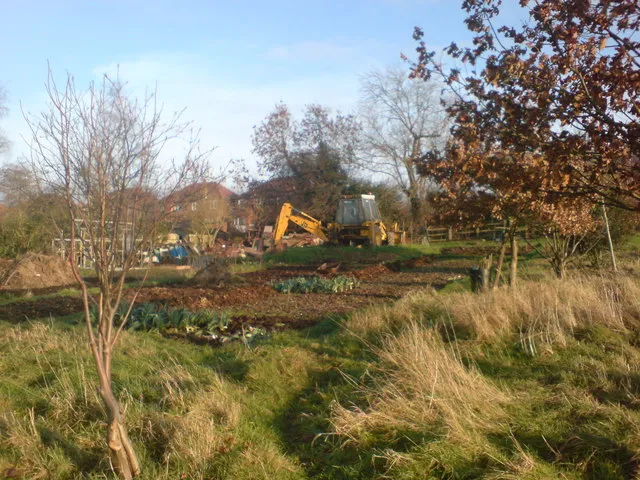
Photo: cris sloan, CC BY-SA 2.0, via Wikimedia Commons
If your spade hits a dull thud and comes up wearing a heavy overcoat of sticky brown soil, you have clay. Welcome to a very large club. Across much of the UK, from new-build gardens to old allotment plots, clay is the default. It is also, despite what the tidy gardening books imply, not a disaster.
Late autumn is when clay gets its chance. The soil is still workable on dry days, worms are active near the surface, and the worst of the winter rain is ahead. November 2026 is a good moment to stop trying to beat the stuff into submission and start covering it instead.
Why clay gets a bad press
Clay particles are tiny and flat. They hold water and nutrients far better than sand, which is why roses, brassicas and beans often do well on clay. The trouble is structure. Wet clay compacts like a badly packed suitcase. Dig it when it is soggy and you make hard clods that bake solid in spring. Walk on it in winter and you squeeze the air out of it.
So the goal is not to turn clay into imaginary loam by Christmas. It is to protect the surface, feed the worms and let roots find their own way. Mulch does that better than frantic digging.
The November principle: cover, don't fold
Think of your beds as sleeping bags for soil. You want a layer on top, not the whole plot turned inside out. Aim for 5–10cm of organic material in total, settling to less. Keep it away from stems and crowns. If the ground is waterlogged, stay off it; wait for a drier spell, even if that means December.
What to layer on now
Compost. Three to five centimetres of homemade or spent compost is the reliable base. It feeds worms and gives the surface a crumbly skin. If your compost is lumpy, don't worry; winter will finish it.
Leaf mould. A generous five-centimetre layer is brilliant on clay. Leaf mould improves structure without adding much richness, which is exactly what heavy soil wants. Save the best stuff for beds where you plan carrots or other roots next year.
Cardboard. Plain brown cardboard is a weed suppressor and worm food. Remove tape and staples, overlap the edges, wet it well and weigh it down with compost or bricks. Avoid shiny printed card. This is a good trick for smothering annual weeds on a new bed, but don't leave it as the only layer; cover it with compost or leaf mould.
Grit. Sharp grit or coarse sand can help the surface drain, but it is not a cure for clay. Use a thin scattering where you are planting crown-heavy crops or in a cold frame, not a thick blanket. Too much grit makes a hard layer of its own.
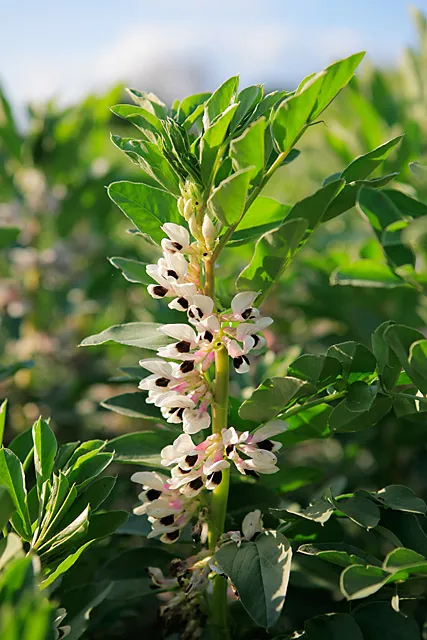
Winter green manure. Field beans and winter tares are the usual choices. Sow them on patches you are not mulching, or between beds. Their roots open channels in clay and their tops keep rain from pounding the surface. Cut them down in spring before they flower and let the tops lie as a mulch. Field beans are also edible, if you can resist leaving them for the bees.
Worms, roots and next year's dinner
A mulch is not just a blanket; it is a slow delivery service. Worms pull organic matter down, creating air pockets and worm casts that are far better than anything a rotavator can do. Frost breaks up lumps near the surface. Roots follow the old worm channels and the cracks made by green manures.
By spring, the soil will not be light and fluffy all the way down. It will be better at the top, which is where most of your seedlings start. That is enough. Brassicas, beans and squash will cope with the rest. For carrots and parsnips, add leaf mould and avoid fresh manure; choose shorter varieties if your clay is very stony.
A wet-weekend plan
- Pick a dry day and stay off wet beds.
- Clear annual weeds and fork out perennial roots.
- Lay cardboard on weedy patches, overlapping well.
- Add compost, then leaf mould.
- Weigh down light material with bricks or branches.
- Sow green manure on any bare patch you are leaving uncovered.
- Mark paths so you don't trample the beds in January.
What not to do
Don't rotavate wet clay. Don't bury woody prunings in the top layer. Don't add lime unless a soil test says so. And don't expect a single mulch to fix everything. Clay is a long relationship, not a quick renovation.
Work with the soil you have. Cover it now, let the worms do the digging, and next year's dinner will have a better start than you think.