Sow the Cover You Can Eat: Field Beans for Winter Beds
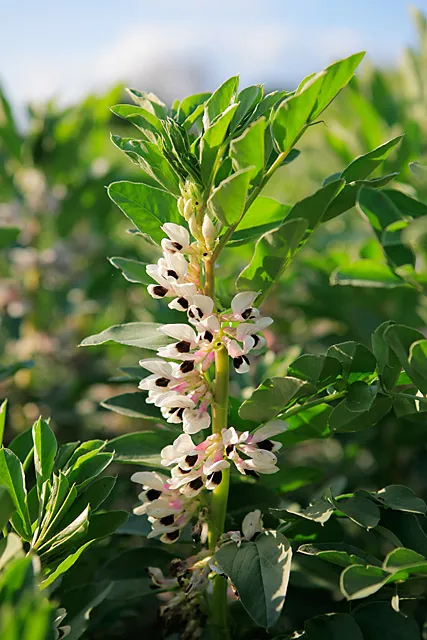
Photo: Peter Facey, CC BY-SA 2.0, via Wikimedia Commons
There is a quiet snobbery in grow-your-own circles about field beans. They are sold as green manure, sown to hold winter soil together, then dug in before they flower. Useful, certainly, but not exactly dinner. That is a shame. Field beans are hardy, generous with biomass and nitrogen, and perfectly edible if you treat them like what they are: a tough, old-fashioned winter legume with a lot going for it.
The best soil-building crop, in my view, is one you can eat. A bed of field beans does not have to be a sacrifice to the compost heap. It can be a winter cover, a spring source of tender tips and a summer crop of beans, all from the same sowing.
Why field beans earn their bed
Field beans are a type of broad bean, usually grown as a farm crop or green manure. They germinate in autumn, sit through winter, grow away in spring and flower early enough to set pods before the worst of the summer dry spell. Their roots form nodules that fix nitrogen, and their stems and leaves produce a decent pile of organic matter. That is the soil-building case.
The kitchen case is just as good. The young growing tips are one of the first fresh greens of the year, picked in March or April when the plot is still mostly bare. The pods can be picked young and cooked like broad beans, though field beans tend to have thicker skins. Left to mature, the beans can be shelled and dried for soups, stews and winter salads. You do not have to choose between soil health and supper.
Sowing in autumn
October and November are the classic months for autumn field beans in the UK. Sow direct where they are to grow. Push each seed about 5 centimetres deep and 20 centimetres apart, with 30 to 40 centimetres between rows. On heavy clay, sow a little shallower and add grit or compost to the drill so the seed is not sitting in a cold puddle.
Mice and birds can take their share, especially in a quiet allotment. Sow a few extra seeds at the end of the row and thin later if everything comes up. Do not enrich the bed with manure before sowing. Field beans fix their own nitrogen and rich soil makes them flop about in leafy luxury rather than setting pods.
Containers and small plots
Field beans are tall plants, often a metre or more, so they are not the obvious choice for a windowsill. But a deep container on a balcony or patio can work if you give them support. Use a pot at least 30 to 40 centimetres deep and wide enough for a wigwam of canes. Two or three plants in a large container is realistic. Sow in autumn as you would in the ground, keep the compost damp but not sodden, and site the pot somewhere sheltered from the worst wind.
In a small plot, field beans can be used as a winter placeholder. They cover the soil, suppress weeds and give you a crop before the bed is needed for courgettes or tomatoes. If space is really tight, grow a short row for spring tips rather than a full bean harvest. The tips alone justify the sowing.
Hardiness, wind and winter care
Field beans are hardy, but hardy does not mean indestructible. They dislike waterlogged roots far more than cold air. Raised beds and containers with good drainage are your friends. In exposed gardens, winter wind can rock the plants and loosen the roots, so firm them in after sowing and check them after gales.
You do not need to mollycoddle them. A light mulch after the plants are established helps keep weeds down, but leave the stems clear. If snow lies heavy on them, knock it off gently rather than letting the stems bend for days. In very wet winters, a cloche or fleece is less about cold and more about keeping the worst rain off the soil.
Support and the blackfly bargain
Field beans grow upright but they are not self-supporting in a windy UK spring. Put canes or sturdy sticks at the ends of the row and run string around the plants as they grow. In a pot, a simple wigwam works well. Support early, before the plants lean, because trying to tie up a flopping bean row in April is a thankless job.
Blackfly love the soft growing tips in late spring. The traditional response is to pinch out the top few inches of each plant once the flowers have set. That removes the aphids' favourite food and gives you a handful of tender tips for the pan. It is one of those garden jobs that feels like a chore until you taste the result.
Eating the crop
Pick the tips when they are young and snap easily, roughly 5 to 10 centimetres long. Steam them briefly, stir-fry them with garlic or fold them through pasta. They have a mild bean flavour and a pleasing green bitterness.
For pods, pick young and small, before the beans inside become starchy. Field beans are not as refined as a modern broad bean, so use them when they are young and double-pod if the skins are tough. Older beans can be shelled and dried. Spread them somewhere airy until the skins are papery, then store in jars for winter soups. A handful of dried field beans added to a stew thickens it beautifully.
The soil payoff
When the crop is finished, cut the stems at ground level and compost them. Leave the roots in the soil, where the nitrogen nodules will break down. Do not dig the bed over deeply; a light fork-over is enough. The point of the exercise is to leave the soil better than you found it, not to bury the evidence.
That is why field beans deserve a winter bed, even a small one. They hold the soil, feed the worms, smother weeds and give you something to eat at the lean end of the year. Green manure is all very well, but a cover crop you can put on toast is a far more persuasive argument for making room in November.