Packet by Packet: A November Reset That Saves You Next Spring
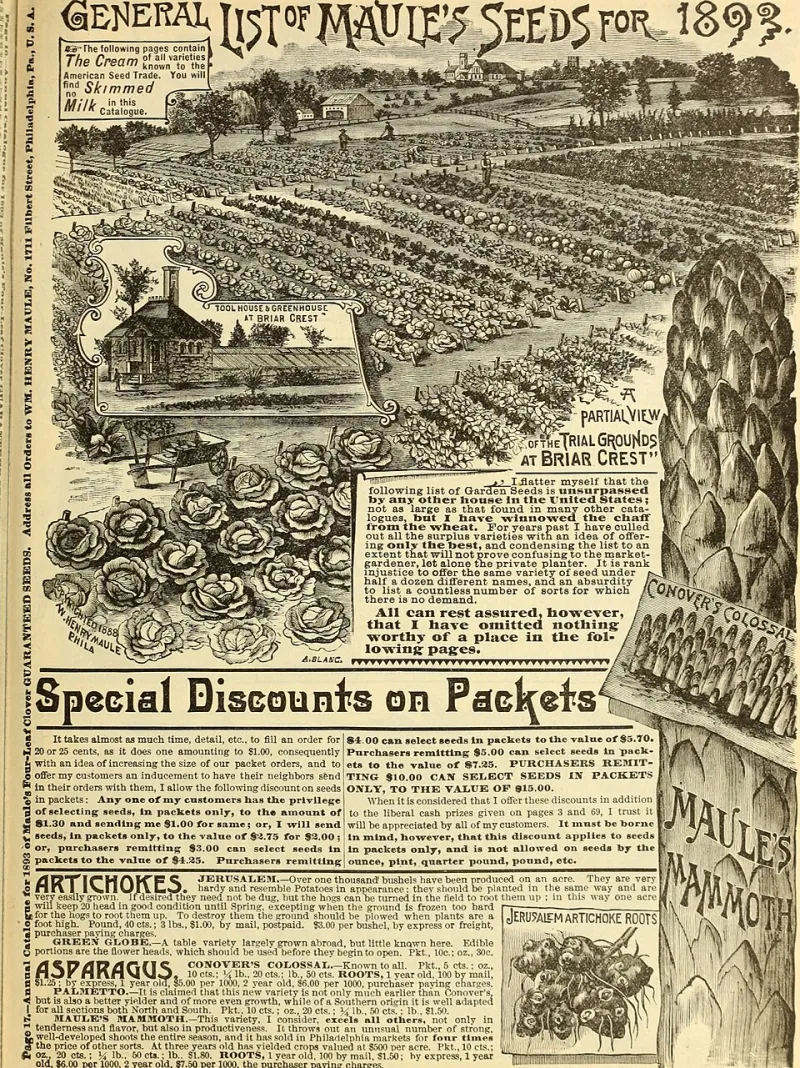
Photo: Wm. Henry Maule (Firm); Henry G. Gilbert Nursery and Seed Trade Catalog Collection, No restrictions, via Wikimedia Commons
There's a Saturday in November when the plot has gone quiet and the seed tin has become a source of low-grade guilt. Half-used packets, faded labels, three varieties of courgette you bought in a burst of enthusiasm and never got round to sowing. This is the afternoon to deal with it.
The point isn't tidiness. It's that every packet you keep is a decision you'll make again in March, and every one you bin now is a decision you can't make badly later. Do the work once, in the wet, and spring gets a lot simpler.
Why November, and not January
Because in November you still remember. You know which tomato croaked on the windowsill in June, which brassicas the pigeons shredded, which bed stayed waterlogged until May. By January that memory has compressed into a vague feeling that things were mostly fine.
Do the audit now, write it down, and store the notes with the seed. What you're making is a record of 2026 — the honest version — and a short list of what 2027 actually needs from you.
Stage one: empty the tin
Everything out. Onto a table. If you have packets in three different places — the shed, a drawer, a coat pocket — gather them all first, otherwise you'll re-buy something you own twice over.
As you go, set up four piles:
Keep. Clearly labelled, in date or near it, and a variety you'll genuinely sow. Test. You're not sure it'll germinate but you'd like to grow it. Toss. Out of date by years, damp, mouldy, or a variety you know you didn't like. Give away. Perfectly good seed you'll never get round to — the swap table, a neighbour, the allotment hut.
Be ruthless in a specific direction: ruthlessly against volume, not against possibility. Keep the varieties; bin the duplicates and the ten-year-old parsnip.
Stage two: know your short-lived seed
Some seed is basically annual. Parsnip, onion, leek, sweetcorn and salsify are all worth testing after one year and often disappointing after two. Carrot and parsnip are the classic offenders — old parsnip seed can germinate at 5 per cent and you'll spend six weeks blaming yourself for bad sowing.
Others are surprisingly durable. Beans, tomatoes, brassicas, beetroot, chard and squash will often come up happily at four or five years old if they've been kept cool and dry. Lettuce is somewhere in the middle. None of this is a guarantee, which is why you test rather than assume.
Stage three: the kitchen-paper test
This costs you a sheet of kitchen roll and ten days.
- Count out ten seeds from the packet. Ten, because it makes the maths simple.
- Space them on damp (not wet) kitchen paper, fold it, and slot it into a labelled sandwich bag or a lidded tub.
- Keep it somewhere warmish and dark — an airing cupboard, the back of a shelf. Not on a radiator.
- Check every second day. Dampen the paper if it dries out.
- Count germinated seeds at day ten to fourteen, depending on the crop.
Nine or ten out of ten, keep the lot. Five or six, keep but sow thickly. Two or three, and it's your call — sow the lot on a spare bit of ground and don't count on it. Zero, and out it goes.
Write the result on the packet in pencil. Next November you'll know.
Stage four: store it like you mean it
The single biggest cause of dead seed is heat and damp, and the single biggest cause of confusion is a blank label.
- Paper envelopes and original packets are fine. Cardboard boxes are fine. Cling film and warm cupboards are not.
- A tin in a cool, dark, dry place — a garage shelf, a cupboard away from the kitchen's steam — beats anything fancy.
- A sachet of silica gel per tin is worth the 80p. Save them from vitamin bottles.
- Rennies? Coffee beans? A spoonful of rice in a paper twist? All right, yes, but silica is less faff.
- Label in pencil, not biro. Biro smudges in damp sheds; pencil survives.
- Never freeze seed unless you know the crop tolerates it. Fridges are fine for a few things but the coil in your tin is the real enemy — condensation.
Stage five: the failure log
Here's the part most people skip, and it's the part that saves the most money. For each main crop, write two lines: what you sowed in 2026 and what happened.
Not 'tomatoes were OK'. Something like: Gardeners' Delight, sown 12 March windowsill, planted out 20 May, got blight in August, three weeks of fruit before it went over. Next year: sow a bush cherry for the balcony, and only four plants, not eight.
That's a plan disguised as a note. Eight tomato plants is the classic small-plot error — it feels economical because the seed is cheap and the packet holds thirty. But space, compost and summer watering aren't cheap, and blight doesn't care how much you spent.
Stage six: the one-page plan
One sheet of A4. Three columns: windowsill, pots/balcony, open ground. Then a row for each month. That's it — no app, no colour coding, no laminating.
Fit the plan to the space you have, not the space in the catalogue:
- Windowsill. A few herbs, a couple of chillies, salad for cutting. Not thirty seedlings in February — the light isn't there, and leggy seedlings in March are worse than later-sown sturdy ones.
- Balcony or small patio. Cherry tomatoes, a chilli or two, a trough of cut-and-come-again, one climbing bean in a big pot. Count your pots before you count your varieties.
- Plot or beds. Rotation first: brassicas, roots, legumes, potatoes/alliums. Then decide varieties — one reliable, one experiment per group, maximum.
Then write, in pencil at the bottom, how much seed you're actually buying this year. For most small gardens the honest answer is: four or five packets, plus whatever survives the test. That's the saving. A £2.50 packet of 50 seeds is fine value if you sow twenty and they come up; it's a tax on optimism if the seed is four years old and you never check.
The bit that feels good
When you've finished, you have a small tin of seed you trust, a page that fits your plot, and about half an hour's worth of notes that will stop you making the same three mistakes in 2027. The bin bag is fuller, the wallet is fuller, and the catalogues can arrive without doing their usual damage.
That's a decent November afternoon's work.