Three Bulbs, Nine Months: Building a Garlic Harvest That Lasts
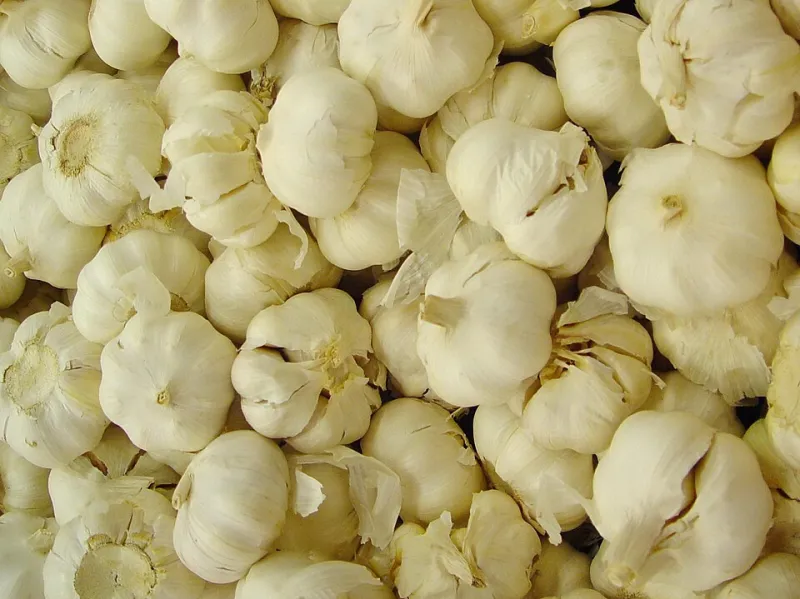
Photo: Leon Brooks, Public domain, via Wikimedia Commons
Garlic is one of the few crops that rewards a bit of forward planning in the gloom of November. You push a clove into cold soil, walk away, and spend the next eight months pretending you are not checking it. But the difference between a decent garlic year and a genuinely useful one is rarely about how hard you try. It is about choosing more than one variety and timing the harvest like a ladder rather than a single rung.
Why one bulb is not a plan
Most of us buy a bag of garlic from a garden centre, split it into cloves and plant the lot. That works, up to a point. The trouble is that every bulb tends to mature at roughly the same moment. You get a glut in July, eat fresh garlic for a few weeks, then watch the rest shrink, sprout or turn woody before Christmas.
A garlic ladder spreads the pressure. You plant three varieties now, but you harvest them at different points from early summer onwards. Some are for eating fresh and juicy, some are for plaiting and storing, and some are the long-haul bulbs that see you through winter. The planting is one job in November 2026; the eating is a nine-month conversation with the kitchen.
The three rungs
Think of the ladder as early, middle and late. The rungs are not created by sowing at wildly different times, because autumn-planted garlic has a fairly narrow window in the UK. They are created by variety, maturity and storage quality.
The early rung is usually a hardneck. 'Early Purple Wight' is a reliable UK favourite, with purple-streaked bulbs and a habit of cropping in late June or early July. Hardnecks tend to produce a scape, the curled flower stem that is delicious picked young and stir-fried. They are superb eaten fresh, but they do not store as long as softnecks. Use them first.
The middle rung is a softneck such as 'Solent Wight' or 'Germidour'. These are the plaiting garlics: tidy bulbs, good keeping quality, and a harvest that often lands in July. 'Solent Wight' has earned its place in British plots because it performs well in our variable summers. Sow it alongside the hardneck and you have a second wave without doing anything complicated.
The late rung is another softneck with a longer season, perhaps 'Cristo' or 'Picardy Wight'. These are the bulbs to lift in August or early September, dry thoroughly and store somewhere cool, dark and airy. They are your autumn and winter supply. If the early hardneck is the first glass of the season, these are the bottles in the cellar.
You can plant all three this month. The ladder is built from genetics and harvest timing, not from a stopwatch in the shed.
Beds, depth and spacing
Garlic likes a sunny spot and soil that drains. In UK beds, that often means raising the row slightly or adding grit if you garden on clay. Do not stuff the planting hole with fresh manure; garlic is not a greedy crop and rich nitrogen encourages soft, leafy growth at the expense of bulbs.
Split the bulbs into individual cloves a day or two before planting. Leave the papery skins on. Push each clove pointed end up so the tip sits about 2 to 3 centimetres below the soil surface. Space cloves 15 centimetres apart, with 30 centimetres between rows. If you are planting in a raised bed, that spacing gives you room to hoe and to see which cloves have failed.
Containers work well, provided they are deep enough. A pot of at least 20 to 25 centimetres depth is sensible. Use a multipurpose compost mixed with grit, plant cloves 15 centimetres apart, and make sure the drainage holes are doing their job. Garlic in a pot is more exposed to freeze-thaw swings, so a sheltered corner against a wall is kinder than a windswept balcony.
Mulch, weather and winter checks
After planting, mulch with a few centimetres of compost or leafmould. This suppresses weeds, keeps the soil from washing about in winter rain and moderates temperature. Keep the mulch slightly clear of the emerging stems so they are not smothered. In containers, a layer of grit on the surface helps stop compost splashing onto the leaves.
Garlic needs cold to bulb properly, so do not cosset it. It does not need a greenhouse. What it hates is sitting in water. Check pots after heavy rain and lift them onto feet if they are standing in a saucer. In beds, avoid walking on wet soil and fork out any obvious flooding.
In late winter and early spring, start weeding. Garlic is a poor competitor and a Row of chickweed can swallow a row of cloves. A light feed in February or March is usually enough; a high-potassium tomato feed later in spring can help bulb fill, but do not overdo it. Hardnecks will send up scapes in early summer. Snap them off while they are tender and use them like green beans or garlicky asparagus.
Harvesting by rung
The signal to lift is not a date on the calendar. It is the leaves. Stop watering when the lower leaves begin to yellow and die back. When roughly three or four leaves are still green and the rest have gone over, lift the bulbs with a fork rather than pulling. Pulling can snap the stem and leave you with a bulb that will not store.
Hardnecks usually come first. Eat them fresh, roast them whole, or chop them into dressings. Softnecks follow. If the weather is dry, lay them on the soil for a few hours to dry, then move them somewhere airy and out of direct sun for two or three weeks. When the skins are papery and the stems dry, plait the softnecks or trim them and store in a cool, dark place. Keep the best bulbs for eating and set aside the fattest, healthiest cloves if you want to plant your own stock again in autumn.
The nine-month kitchen
A garlic ladder does not mean you never buy garlic again. It means the home-grown stuff has a longer arc. Fresh hardneck in June, softneck through late summer, cured bulbs through autumn and into winter. You get scapes as a bonus crop, and you learn which varieties suit your soil rather than which ones simply happened to be on the shelf.
Three bulbs is not a lot of extra work. It is one planting session, a little labelling and a bit of restraint when the first leaves yellow. The reward is a kitchen that smells of garlic from early summer onwards, which is a very good reason to get muddy in November.