Nine Scraps, One Sill: An Honest Costing of Supermarket Leftovers
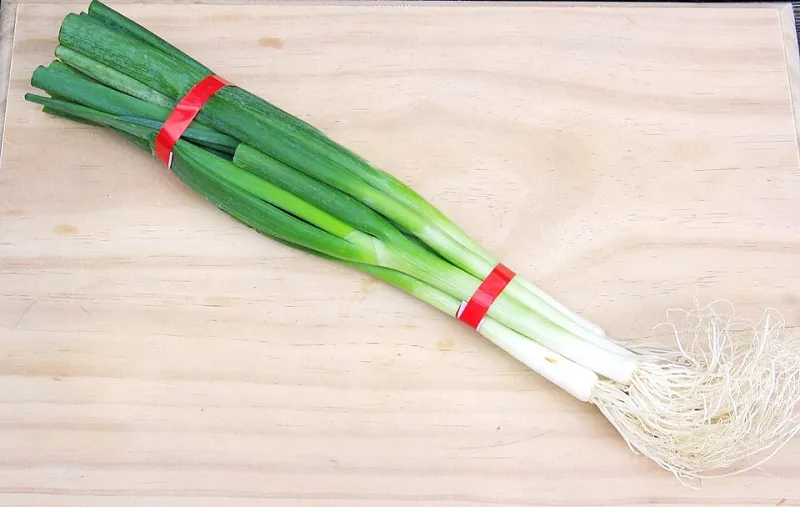
Photo: Donovan Govan., CC BY-SA 3.0, via Wikimedia Commons
Every winter the same thing happens. You cut the root off a bunch of spring onions, look at it, and think: I could grow that. And you can. The question nobody answers properly is whether you should — whether that square of windowsill, that jam jar, that three minutes every other day, is actually buying you anything.
So I spent a chunk of last winter running the experiment properly on a south-facing sill in a flat with single glazing. Nine scraps, weighed and noted. Some of it was genuinely brilliant. Some of it was a slow, damp disappointment. Here's the honest version.
The rule that saves you the first fortnight
Regrowing works from a growing point. Roots, basal plates, nodes — anything with live tissue that can push out new growth. It does not work from a seed coat, a starchy tuber you've half eaten, or a tropical fruit that wants 30°C and a rainforest.
So: roots and bases, yes. Seeds and stones, no. That single distinction kills about 80 per cent of the internet's scrap-growing content before you've spent a penny.
The ones that genuinely pay
Spring onions. The undisputed champion. Keep the bottom 2cm with the roots intact, stand them in a centimetre of water, change it every other day. You'll get three or four cuts of green tops over six to eight weeks before the plants weaken and go thin. From a 59p bunch that's a modest saving in cash but a real one in faff — you're not trotting to the shop for a garnish in February.
Leeks. Same trick, slimmer reward. The regrowth is delicate and grassy, good snipped into soup, but it never gives you a leek. Treat it as a herb, not a vegetable, and you'll be pleased rather than disappointed.
Garlic. A clove or two, pushed into a pot of compost rather than a jar, gives you green garlic shoots in about three weeks. These are excellent — sweeter and gentler than the bulb — and one clove yields several cuts. This is the scrap trick with the best ratio of flavour to effort on the whole list.
The half-promises
Celery base. It works, but slowly, and the result is a small tuft of thin, distinctly bitter stems. In November light you're looking at eight to ten weeks before anything worth chopping appears. It's a fine thing to do with a base you were going to bin, but it will not replace a bunch of celery, and in December it will sulk. Give it the brightest spot you have.
Little gem and romaine hearts. The heart regrows leaves, yes — but in a UK winter you're competing with roughly six hours of weak daylight. Expect a loose rosette of small leaves rather than a heart. Lovely for a sandwich. Not a salad bowl. If your sill is shaded, don't bother.
Fennel base. Similar story, more aromatic, more prone to rot. Wash the base properly, dry it, and change the water obsessively — fennel bases go slimy faster than anything else on this list.
Carrot tops: read the label carefully
Carrot tops will sprout feathery green growth from the flat end in a saucer of water, and it's genuinely pretty. What they will not do is make carrots.
The greens are edible — parsley-ish, slightly bitter, decent in a greengrocer-ish salsa verde or blitzed into a pesto with walnuts. But be clear-eyed: you are growing a garnish from a vegetable you already ate. It costs you nothing but a saucer, so it's a fine experiment for a child's windowsill. It's not food security.
Ginger: the slow burn
Ginger needs warmth and patience, not a jar of water. A knuckle with visible buds, laid in damp compost, kept at around 20°C, will eventually throw up shoots. In a cold flat in January, 'eventually' can mean three months.
Here's the catch people skip: you don't harvest ginger from a windowsill pot. You harvest flavour — a few small rhizomes, or the leaves, which steam beautifully with fish. If you want a kilo of ginger, buy a kilo of ginger. If you want to grow something that genuinely gives you a dozen small harvests, grow the ginger.
Straight to the compost
Potato peelings with eyes. Onion bottoms (one measly spring of green, then done). Avocado stones, mango, citrus pips, pineapple crowns — all lovely projects, all need heat and years, none suited to a British windowsill in the dark half of the year. Apple and tomato seeds from your lunch will germinate; they will not give you fruit you'd want to eat.
The compost bin is not a failure state. It's the correct destination for 90 per cent of kitchen waste.
The bit that decides everything: hygiene
Almost every scrap-growing failure is rot, not light. Three habits fix it:
- Use a clean jar each time, not the same one for a month.
- Change the water every two to three days, and rinse the roots under the tap while you're at it.
- Take scraps out of the water and pot them into compost as soon as roots are 2–3cm. Water-only is a nursery, not a home.
If a base smells sour or goes brown at the cut surface, bin it. Don't try to rescue it. One rotting celery base can fog up a small kitchen.
Light, honestly
A UK windowsill in November and December gives you maybe a quarter of what a plant wants. South-facing and unobstructed, you're fine for greens and shoots. North-facing, you're wasting your time on anything leafy — stick to garlic shoots and spring onions, which are forgiving, and put your ambition away until February. Turn pots a quarter-turn every few days so they don't lean into the glass.
The ledger
Add it up over a winter. Nine scraps, water, a bit of compost, maybe half an hour a week. In return: a steady supply of green tops, garlic shoots, a few herbs' worth of carrot-top pesto, and a couple of small salady handfuls.
That's not a fortnight's shop. But it's not nothing either — and the real return is that you'll be handling growing things in the dead months, learning how fast roots move and how much light your sill really gets. That knowledge is worth more than the onions. Then, when February comes, you'll know exactly what to sow.